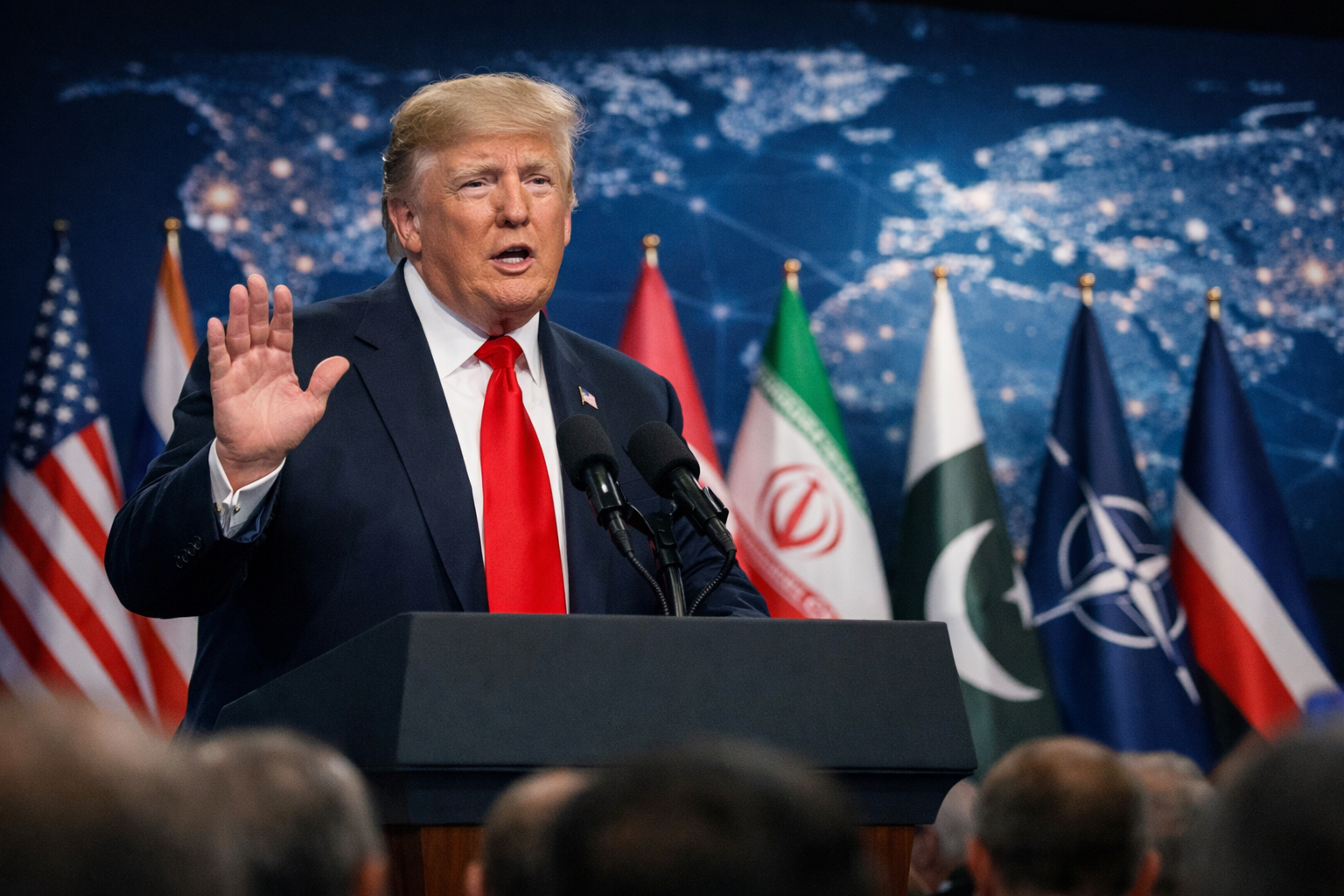
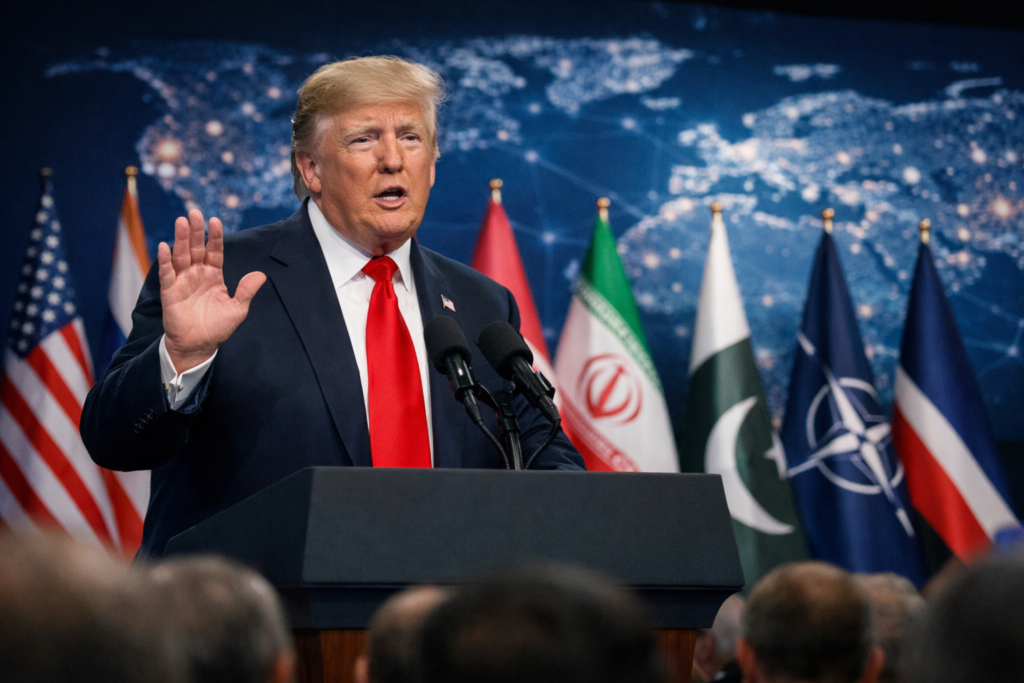
U.S. President Donald Trump once again positioned himself as a leader dedicated to reducing conflict. He expressed a desire for his political legacy to focus on preventing wars rather than starting them. At the Future Investment Initiative Priority Summit in Miami, Trump linked his foreign policy record to various international disputes and claimed that economic pressure is often more effective than prolonged military confrontation. (Korea Joongang Daily)
In his remarks, Trump noted that many global tensions can be managed when countries recognize the economic consequences of escalation. He described diplomacy, trade leverage, and direct pressure as methods to sometimes stop conflict before it escalates into a military confrontation. He asserted that international negotiations work better when supported by clear economic consequences, instead of just political statements.
One of the strongest points in his speech was his claim that his administration had influenced multiple conflict situations across different regions. He mentioned tensions between India and Pakistan, stating that tariff threats helped avoid a broader escalation. While his claims are politically debated, Trump used this example to argue that economic tools can prompt immediate responses when diplomatic efforts slow down.
He also mentioned other conflict areas, including the disputes between Armenia and Azerbaijan, as well as regions in Africa and the Middle East. The main point of his speech was that pressure-based diplomacy should be a key strategy in international relations, especially when military conflict threatens trade, energy supply, and investment confidence.
A significant part of his address focused on Iran, where Trump stated that future agreements would require secure maritime movement through the Strait of Hormuz. He emphasized the importance of uninterrupted oil transport, as this waterway carries a significant portion of global crude exports. Recent tensions in the Gulf have raised global concerns, as any disruption to this route can quickly impact shipping costs and international energy prices. (Reuters)
Trump argued that normal passage through the strait is essential for advancing broader negotiations. His comments came as markets closely monitor developments in West Asia, since even minor disruptions in Hormuz can affect fuel prices in Asia, Europe, and North America.
During the speech, Trump made an unusual joke, briefly calling the route the “Strait of Trump” before correcting himself. Although meant humorously, the remark gained attention due to the tense geopolitical situation in the area. International energy analysts consider the Strait of Hormuz one of the world’s most critical trade chokepoints, given that nearly one-fifth of globally traded oil passes through that narrow corridor.
Trump also discussed recent U.S. military actions targeting Iranian positions but avoided labeling them as a formal war. Instead, he described these actions as military operations aimed at reducing strategic threats. He claimed that strong military pressure has diminished Iran’s regional standing and that Tehran’s nuclear advancements have been significantly delayed. Reuters and other international reports indicate that Washington continues to blend military pressure with negotiation signals, even as talks remain uncertain. (Reuters)
Another major section of Trump’s speech criticized the North Atlantic Treaty Organization. He argued that burden-sharing is unequal and that the U.S. often bears a heavier strategic load than many allies. This critique aligns with earlier statements where he asserted that allied contributions should more closely match American commitments. NATO’s official funding structure shows that budgets are shared among members, but debates about military contribution levels continue. (The Washington Post)
Trump’s remarks illustrated his long-standing foreign policy approach: a blend of pressure, negotiation, and strong public messaging. Even when discussing military operations, he consistently returned to the notion that achieving peace through pressure is preferable to prolonged war.
The Miami summit garnered attention because it occurred as investors closely monitored conflict risks in the Middle East. Saudi-backed investment discussions at the summit were heavily influenced by concerns regarding energy stability, shipping security, and confidence in regional investments. Economic observers noted that ongoing instability in the Gulf could impact global markets and long-term capital movement. (Barron’s)
By the end of his speech, Trump reiterated that history may judge leaders not just by military actions but by their success in avoiding larger wars. His main message remained clear: strong negotiation supported by visible leverage, in his view, leads to quicker political results than waiting for conflicts to escalate.
About the Author