By Ashutosh Raj
Published: MAY 14, 2026 | Updated: MAY 14, 2026
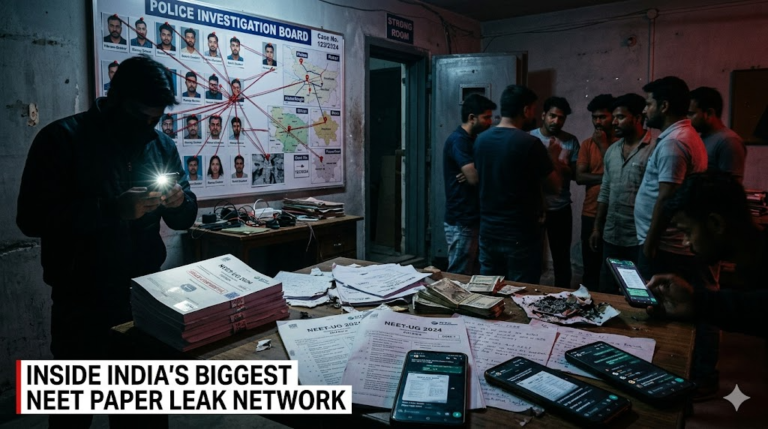
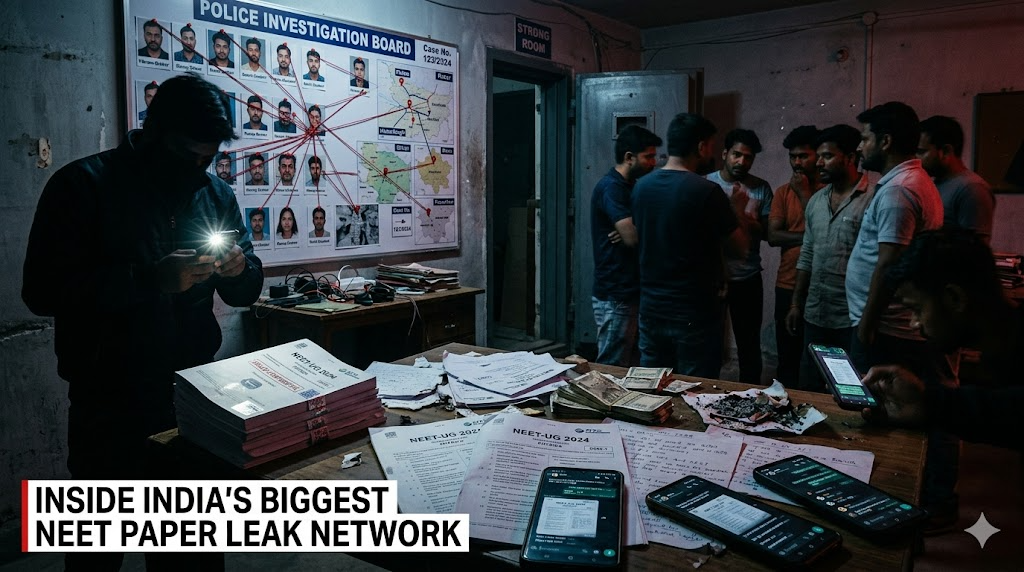
The NEET-UG controversy stopped looking like an ordinary cheating case the moment investigators began tracing burnt question paper fragments back to a secure storage chain linked to Hazaribagh. What initially appeared to be isolated malpractice in Bihar gradually unfolded into allegations of an organized network involving brokers, MBBS students, middlemen, local operators, school officials and suspected insider access around one of India’s most competitive medical entrance examinations.
The investigation gathered momentum after suspicious activity was reported in Patna on the day of the examination. Police teams recovered partially burnt paper copies, questioned candidates and registered an FIR that later expanded into a much larger probe involving Bihar’s Economic Offences Unit and eventually the Central Bureau of Investigation. What made the case unusually serious was not only the allegation that questions had circulated before the exam, but the claim that the breach may have originated from within the secured handling system itself.
According to investigation details presented during court proceedings and agency findings, the alleged starting point of the leak was linked to Oasis School in Hazaribagh, Jharkhand, which had reportedly been assigned responsibilities connected to examination logistics. Investigators examined the role of individuals including school principal Ehsanul Haque and vice principal Imtiaz Alam over allegations related to access facilitation. Reports also repeatedly mentioned Pankaj Kumar, also known as Aditya, as a central accused figure allegedly connected to the physical breach of question paper security. All accused individuals remain subject to judicial process, and allegations do not amount to legal conviction.
The alleged method described by investigators reflected planning rather than impulsive cheating. According to the sequence reconstructed during the probe, a secure room containing examination material was allegedly accessed on the morning of the exam itself. Investigators claimed sealed paper packets were temporarily opened, photographed and resealed before distribution networks became active. This detail became one of the most alarming aspects of the case because it suggested that the breach did not happen days earlier through online hacking, but potentially through physical access inside a controlled security environment shortly before the examination began.
From there, investigators allege the material moved rapidly through a solver ecosystem. Images were reportedly sent to selected locations where groups described as “solver gangs” worked to decode and solve the paper within limited time. These groups allegedly included medically trained individuals and MBBS students capable of producing accurate answer sets quickly. Some reports linked students from medical institutions, including AIIMS Patna, to parts of the investigation. Authorities believe solved answers were then memorized by selected candidates before the examination.
The financial structure surrounding the operation exposed how deeply commercialized exam fraud has become. Different investigations and state-level findings suggested pricing varied dramatically depending on access level and guarantees offered. In Bihar, some candidates were allegedly charged between ₹30 lakh and ₹50 lakh for premium arrangements involving paper access, memorization support and rank promises. Other networks reportedly operated lower-cost packages ranging from ₹30,000 to several lakhs using so-called “guess paper” circulation models. Investigators suspect resale chains existed where access purchased from one layer was resold to smaller agents for profit.
An important point often missed in public discussion is that modern paper leak networks operate more like organized supply chains than traditional student cheating rings. There are recruiters targeting families, financial handlers, transportation coordinators, technical solvers, document distributors and local protection layers. The NEET investigation highlighted how exam pressure, medical seat scarcity and enormous private coaching economies have created conditions where criminal groups see competitive exams as profitable markets rather than educational systems.
The controversy intensified further because of parallel criticism faced by the National Testing Agency. Questions emerged regarding unusually fast result declarations, disputed grace marks and the viral debate around an unexpectedly high number of top scorers. Although the Supreme Court acknowledged that leaks and localized compromise had occurred, the court ultimately held that evidence did not establish a complete nationwide collapse of exam integrity sufficient to justify cancelling the entire examination across India.
That decision left millions of students emotionally divided. For many aspirants, the case reinforced a growing fear that merit-based examinations can still be manipulated through money and networks. Students from ordinary backgrounds expressed concern that years of preparation could be undermined by organized fraud systems operating beyond their control. The psychological damage extended beyond one exam cycle because trust, once weakened, becomes difficult to rebuild.
The investigation may ultimately reshape how India conducts high-stakes entrance examinations. Discussions around encrypted digital delivery, randomized question pools, AI-assisted monitoring and stronger chain-of-custody protocols have already intensified. Security experts also argue that physical storage systems dependent on local administrative handling may require complete redesign.
The broader lesson from the NEET case is uncomfortable but important. Competitive examinations are no longer threatened only by individual cheating attempts. They are increasingly vulnerable to structured criminal ecosystems built around desperation, money and institutional loopholes. The case exposed how educational corruption can evolve into an organized parallel economy operating quietly beneath one of the country’s most aspirational systems.
About the Author
Ashutosh Raj is a journalist and independent writer known for clear, fact-based reporting and sharp editorial judgment. His work focuses on delivering accurate information with original analysis, structured storytelling, and strong attention to credibility. He writes with a commitment to clarity, relevance, and meaningful public understanding.
About the Author