By Ashutosh Raj
Published: April 15, 2026 | Updated: April 15, 2026
The case linked to a Tata Consultancy Services back-office unit in Nashik has become one of the most closely watched workplace investigations in India because police are no longer treating it as a single complaint against one employee. Investigators now believe several complaints point to a repeated pattern involving abuse of workplace authority, delayed reporting, alleged institutional silence and possible failures in the internal complaint system meant to protect employees. What initially appeared to be an internal harassment issue has expanded into a larger legal and corporate accountability question after multiple women described similar experiences inside the same reporting structure.
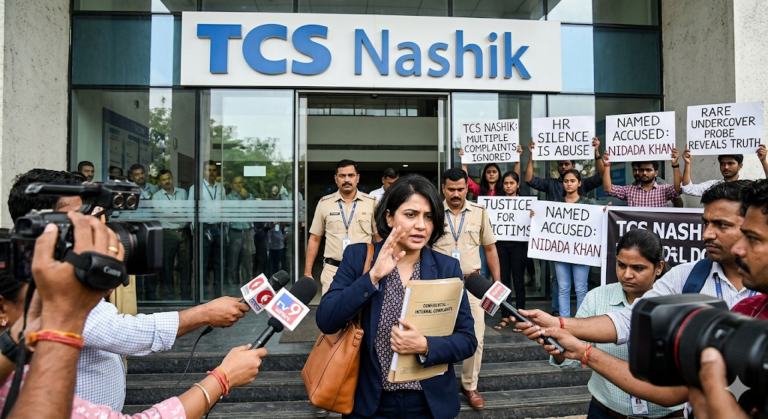
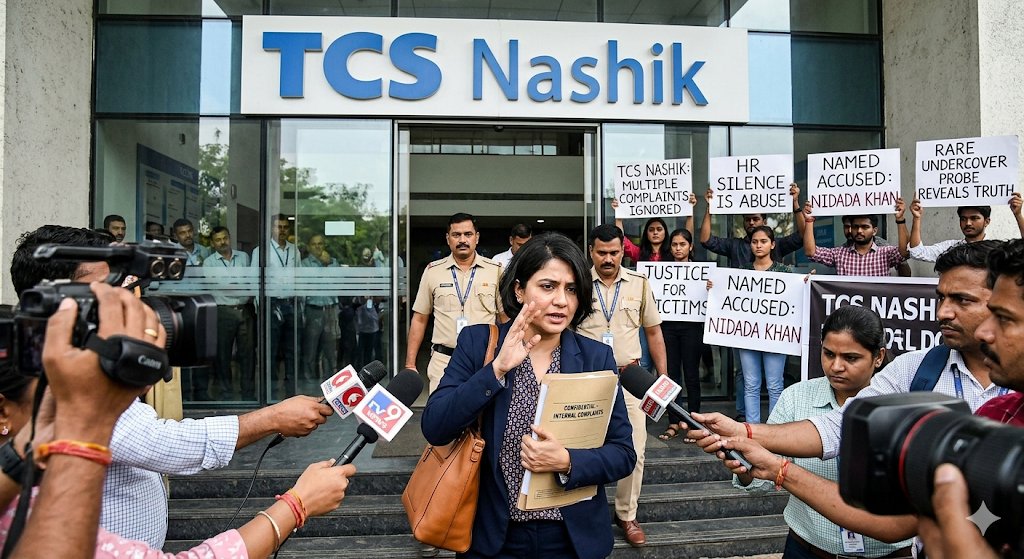
According to the investigation so far, several individuals holding team leadership positions have been named in police action, including Asif Ansari, Shafi Sheikh, Shah Rukh Qureshi, Raza Memon, Tausif Attar and Danish Sheikh. Alongside them, HR manager Nida Khan has drawn serious scrutiny because investigators believe complaints may have reached HR channels without timely escalation under workplace safety rules. What makes these names significant is not only legal visibility, but the fact that all of them were connected to operational authority over junior staff through shift control, task assignment, appraisal influence and daily reporting pressure.
Police believe that authority itself became the first layer of vulnerability. In BPO environments, especially where young staff depend heavily on monthly salary and career stability, team leaders often become the immediate gatekeepers of everyday professional comfort. They influence whether an employee receives flexible shifts, manageable targets, leave approval or favourable internal feedback. That practical dependence can create silence even before formal intimidation begins, because junior employees often fear that resistance may quietly affect future performance ratings.
Investigators say the pattern described by complainants did not begin with overt misconduct. According to statements under review, several women described a gradual process in which seniors first built personal trust under the language of mentorship, guidance or emotional support. That was followed, according to allegations, by repeated private messaging, personal monitoring, inappropriate remarks, emotional pressure and later behaviour that victims interpreted as coercive. This layered pattern is one reason police are examining whether the same behavioural methods appeared across multiple complaints rather than isolated unrelated incidents.
The allegations widened because some complaints moved beyond verbal misconduct into claims of physical harassment, unwanted touch, stalking and repeated psychological pressure inside office environments where long working hours and close reporting structures made avoidance difficult. Investigators are examining whether ordinary workplace interaction may have helped certain behaviour remain unnoticed for a long period because repeated contact inside professional settings often appears routine from outside while victims internally experience growing pressure.
The HR angle has become one of the most critical parts of the investigation. Under the Prevention of Sexual Harassment law, every large workplace must not only maintain an Internal Complaints Committee but also ensure that complaints move safely and confidentially through formal channels. In this case, police are reportedly examining around 78 emails and digital conversations because some complainants allege concerns were raised but did not lead to meaningful intervention. If those records confirm delayed action, the legal focus may move beyond individual misconduct toward institutional negligence.
This explains why Nida Khan’s role has drawn exceptional attention. As HR manager linked to Nashik operations while working from Pune, she was expected to function as a compliance safeguard rather than merely an administrative contact. Investigators now want to know whether warning signs remained trapped inside reporting layers without reaching the internal systems required by law. In many corporate cases, HR becomes visible only after formal complaint escalation. Here, police suspect complaint handling itself may have become part of the failure.
One reason the matter became so large is that the first breakthrough reportedly came from outside the office, not inside it. Investigators say one victim’s family noticed emotional and behavioural changes and pushed for police intervention when internal reporting did not appear effective. Once one complaint entered law enforcement channels, more women reportedly began describing similar experiences. This often happens in workplace abuse cases: one external complaint lowers the fear barrier for others who had stayed silent for months or even years.
Police then took an unusually rare step for a corporate case: officers reportedly entered the office disguised as housekeeping staff and cleaners for nearly a month to observe daily behaviour before moving toward arrests. Such undercover observation is uncommon in white-collar workplace investigations because police usually rely on statements, digital records and internal evidence. Here, investigators appear to have wanted behavioural confirmation before acting inside a major corporate unit. That alone shows how seriously the matter was being treated.
The religious coercion allegations gave the case even wider public attention because they moved it beyond standard workplace harassment claims. Some complainants alleged pressure related to religious practices, including being asked to follow practices against their will. Investigators are treating these claims separately and carefully because such allegations require independent corroboration through testimony, digital evidence and witness support before legal conclusions can be drawn. At this stage, these claims remain under verification, not final judicial finding.
A larger question many readers ask is how such allegations can emerge inside a company with a global compliance reputation. The practical answer is that large companies can have strong written policies while local enforcement still weakens if one office develops a closed reporting culture. A multinational may run mandatory ethics modules, POSH training and audit systems, yet if junior staff do not trust complaint channels, policy strength stays theoretical.
The Nashik location itself also matters. Over the last decade, major IT and BPO firms have expanded into Tier-2 cities because operating costs are lower than metro centres. But smaller city offices sometimes carry a hidden risk: fewer external support systems, weaker employee legal awareness, and tighter local social dependence. Young workers living away from family may hesitate longer before escalating serious problems.
TCS has suspended the employees under investigation and stated that senior leadership is overseeing an internal review. That immediate step reduces operational risk, but the deeper lesson for the wider IT sector is sharper: most large corporate crises do not begin dramatically. They begin quietly—through small ignored complaints, informal authority, delayed escalation and silence that lasts too long. The Nashik case has become nationally important because it now tests whether workplace safety systems in India can actually function before police intervention becomes necessary. ⚖️📄
About the Author
Ashutosh Raj is a journalist and independent writer known for clear, fact-based reporting and sharp editorial judgment. His work focuses on delivering accurate information with original analysis, structured storytelling, and strong attention to credibility. He writes with a commitment to clarity, relevance, and meaningful public understanding.
About the Author