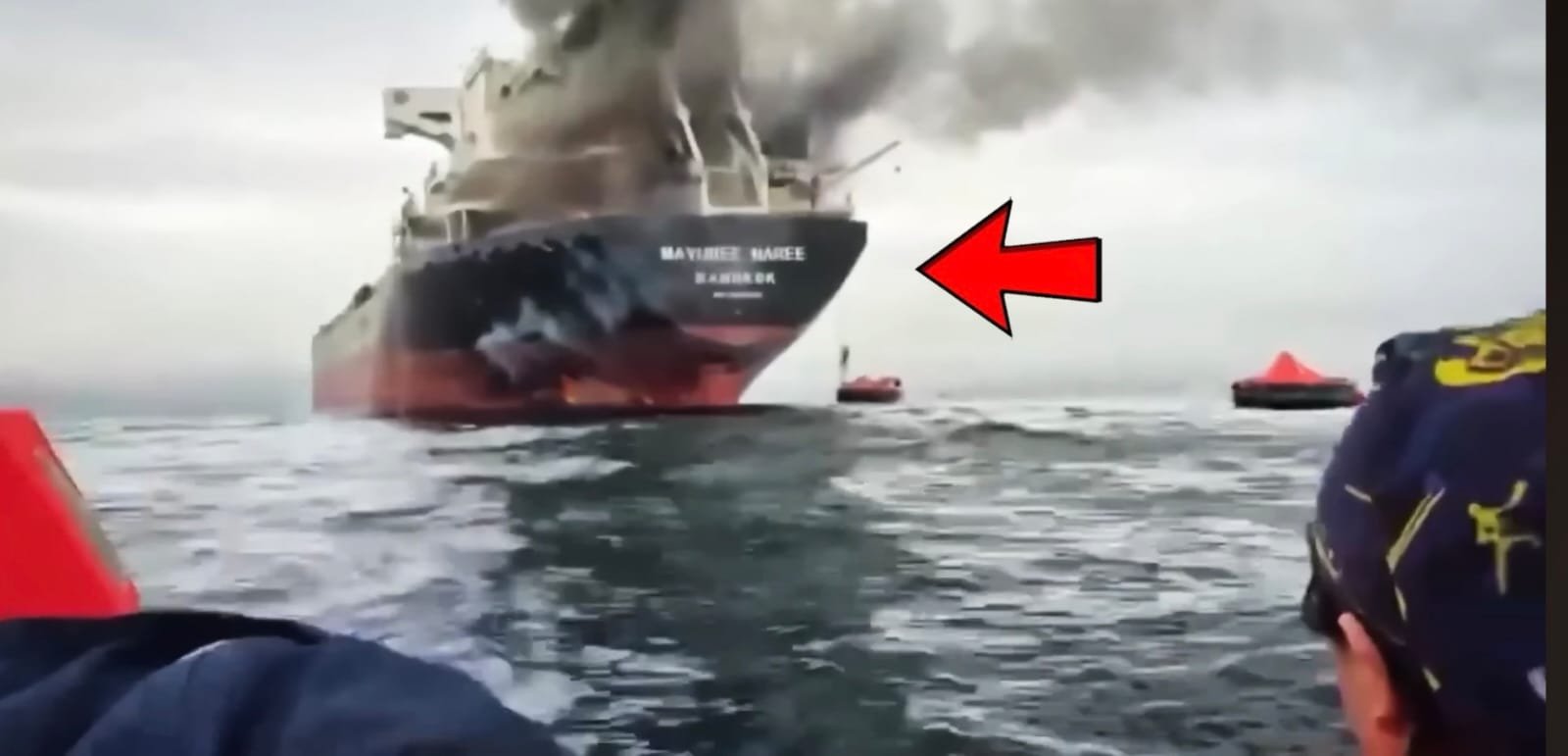
New ambiguity has arisen in one of the most geopolitically sensitive sea lanes of the world as Iran increased restrictions on ships in the Strait of Hormuz providing for limited travel for a handful of countries and greater oversight for ships linking to states Iran considers to be hostile in the region today.
The Strait of Hormuz a slender strait linking the Persian Gulf with the Arabian Sea is still a must for world energy trade as almost one-fifth of the world’s traded crude oil transits through this route every day. Any operational hiccup in this route is going to be felt in the movement of tankers freight rates and the mood of the international oil market.
Current information suggests that Iranian authorities are not imposing a total blockade of the route but rather control of selected passage of ships according to the ship`s country of registration, destination and strategic alignment. Members of the Iranian government have said ships tied to India, China, Russia, Iraq, and Pakistan might still sail through monitored and will go to monitored. Routes of trade aligned with the US and strategic military allies are being examined more closely and having movement limitations placed upon them.
The change has come to the notice of several merchant vessels that issued security warnings, were held up and rerouted while approaching Gulf waters. Maritime surveillance data indicates that a number of ships either slowed down or changed course prior to reaching the sections of the strait deemed high risk, indicating an increasing judiciousness of maritime carriers.
Among the most closely observed events was the incident with Chinese-affiliated container ships that at first came into the passage corridor and then backtracked, despite the previous indication that Chinese commercial activity would be kept safe. Experts claim this points to the general confusion that now even the most diplomatically close countries to Tehran are experiencing.
Security services and global shipping analysts agree that the current tactic is probably to keep the strategic pressure and not to declare a legal blockade. Rather than completely shutting down the waterway Iran is showing restraint with vessel screening naval patrols and communications with vessels in the sensitive sectors of the waterway.
General worry for world markets is that even a partial restriction can cause a big economic result. Maritime insurers usually increase the premium as soon as operational unpredictability is heightened in areas of conflict and cargo ships usually wait for the route to become less risky.
Because a large portion of imported crude depends on continuous Gulf shipping, the route continues to be especially important for Asian economies, including India. Long-term instability may eventually raise delivery costs and fuel import pressure, even if Indian-linked vessels continue to have restricted passage.
A broader geopolitical struggle taking place throughout West Asia, where military pressure, trade security, and diplomatic signaling are now directly influencing one another, is also reflected in the current maritime tension. One of the most effective strategic tools available during times of regional conflict, according to analysts, is control over shipping corridors.
Participants in the energy market are still concerned about whether the present selective restrictions will stay in place or progressively develop into more significant operational disruption. Global trade confidence, supply contracts, and crude benchmarks could all be swiftly impacted by any prolonged increase in vessel control near Hormuz.
For the time being, commercial passage is still active but closely monitored, with governments, insurance companies, and shipping firms viewing every new vessel movement in the region as a key sign of potential future developments.
About the Author