India’s school education system is once again drawing attention to one of its longest-running structural issues: a growing number of qualified teaching aspirants competing for limited formal recruitment opportunities while many schools, especially outside urban centres, continue to report uneven subject-wise staffing.
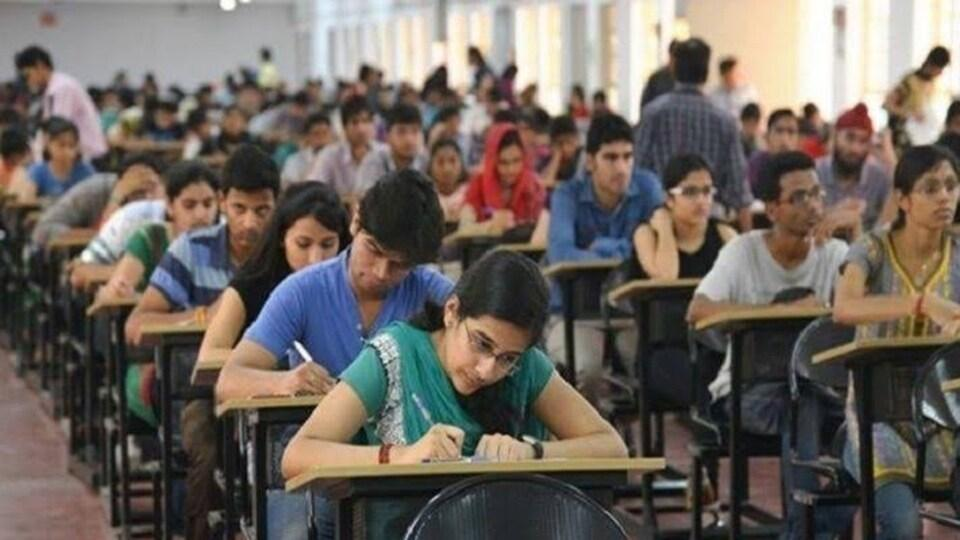
This week’s large-scale higher secondary teacher aptitude examination in Gujarat has become a fresh example of that imbalance. Nearly 1.65 lakh candidates registered for the state-level eligibility test designed for higher secondary teaching appointments, showing both the continuing attraction of government teaching careers and the increasing pressure on state recruitment systems to filter candidates more rigorously.
At first glance, such examinations appear to be routine administrative exercises. But the scale of participation reveals a much deeper pattern visible across India’s education sector: public teaching jobs remain among the most sought-after stable careers for graduates, particularly in states where private school salaries remain inconsistent and long-term employment security is limited.
The exam itself was conducted under tighter supervision after earlier scheduling concerns forced administrative adjustments. Officials increased centre-level monitoring and logistical coordination because of the unusually high volume of applicants. Large candidate turnout is no longer rare in teacher recruitment, but what is changing is the level of scrutiny attached to selection.
State governments are increasingly under pressure to improve learning outcomes rather than simply fill vacancies. This has changed the way teacher eligibility systems are being designed. In many regions, aptitude testing is now treated as an independent filter before subject competency and document verification stages.
That shift is closely linked to broader reforms encouraged under the National Education Policy, where teacher quality has become central to long-term school improvement targets. Policymakers increasingly view recruitment not as a staffing exercise alone, but as an academic performance intervention.
The pressure is particularly visible in science and mathematics teaching. Several states continue to report uneven distribution of trained subject teachers, with urban schools attracting stronger applicants while remote districts struggle to retain qualified staff. This creates a contradiction: examination participation remains extremely high, yet actual placement in difficult regions often remains uneven.
Education analysts note that many applicants now spend years preparing for multiple teacher examinations because recruitment cycles differ sharply between states. Delays in document verification, litigation over reservation lists, and changing qualification criteria often slow final appointments even after exams are completed.
For candidates, this creates a long preparation cycle where eligibility does not guarantee quick employment. For governments, it creates a growing pool of aspirants who repeatedly re-enter recruitment systems while vacancies remain administratively unresolved.
Another important factor behind rising competition is the relative economic stability associated with formal teaching employment. In many states, government teaching posts continue to offer salary security, pension-linked benefits, and stronger social credibility than many private-sector entry roles available to education graduates.
This is particularly relevant in smaller towns, where a teaching position often remains one of the few long-term professional options considered socially stable by families.
At the same time, school systems are facing new expectations that go beyond traditional classroom teaching. Teachers are increasingly expected to manage digital reporting systems, assessment platforms, attendance digitisation, and competency-based learning frameworks.
That means future recruitment may place even greater emphasis on adaptability rather than only textbook knowledge.
Several education departments are already discussing whether future eligibility systems should include stronger classroom simulation methods or digital teaching capability checks, especially as blended learning tools expand even in government schools.
The broader challenge is that examination success alone cannot solve staffing quality unless appointment speed improves after recruitment.
Many schools continue functioning with temporary arrangements because final appointments often take months or years after written eligibility tests are completed.
For India’s education system, this means recruitment pressure is now tied directly to classroom outcomes. A large number of applicants shows supply, but actual educational improvement depends on how quickly that supply turns into effective classroom placement.
As more states redesign teacher hiring under quality-focused frameworks, teacher eligibility exams may increasingly become not just recruitment gateways, but indicators of how seriously states are treating school-level human capital in the coming decade.
About the Author